
Lab-grown or natural?
You decide which stone goes into your piece. Here is what sets the two apart — and what does not.
Try it out.
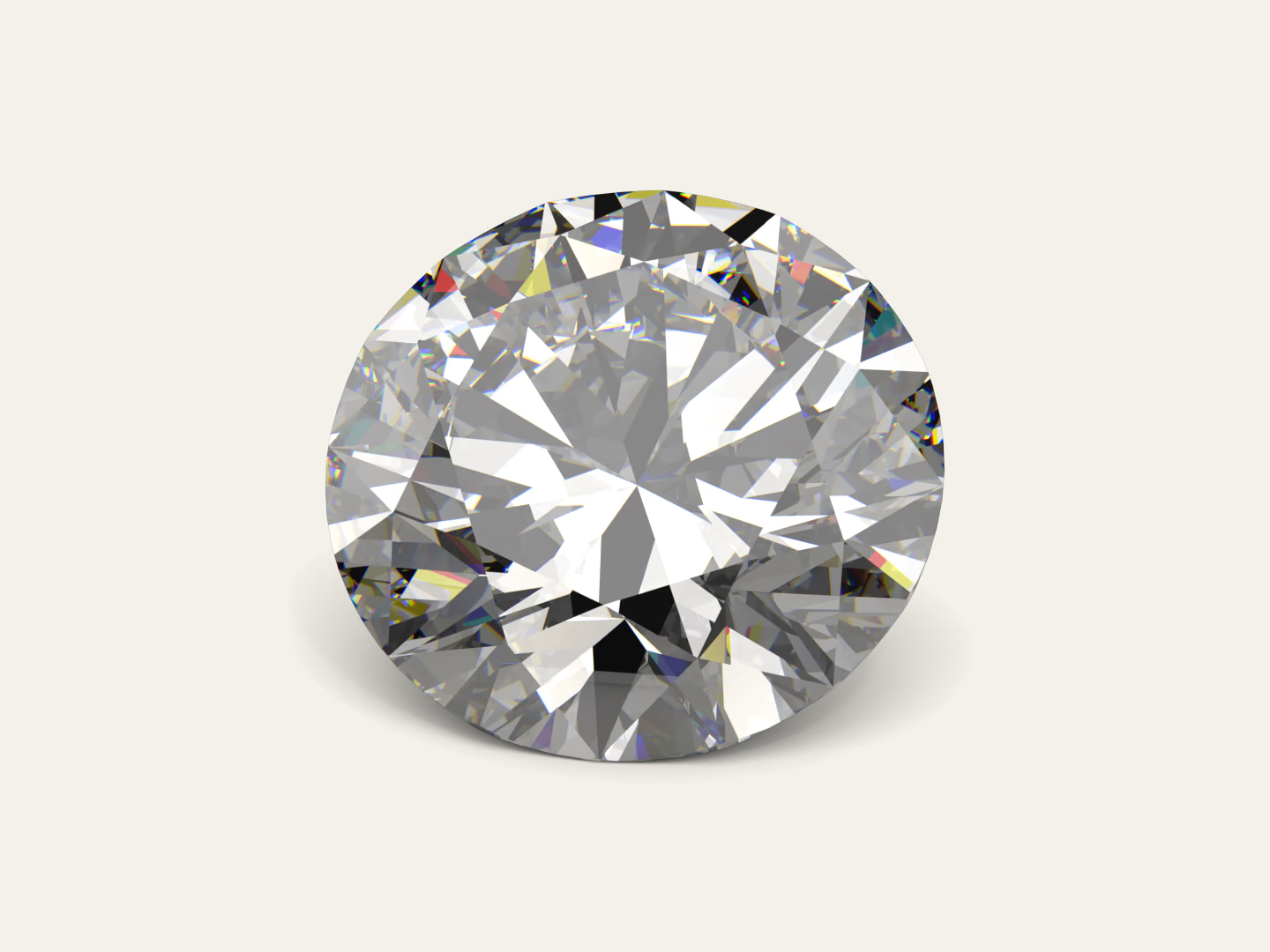
Example images to give you a feel for the cut shapes. Which stone suits you, we will discuss at the appointment.
The same material, a different origin
A lab-grown diamond and a natural diamond are chemically and optically the same material: crystalline carbon with the same refractive index. The difference lies in how they came to be — one grew in a lab, the other formed in the earth and was extracted by mining. A grading lab can verify the origin.
| Feature | Lab-grown | Natural |
|---|---|---|
| Material | Diamond, crystalline carbon | Diamond, crystalline carbon |
| Refractive index | ≈ 2.42 | ≈ 2.42 |
| Origin | grown in a lab (CVD or HPHT process) | formed in the earth, extracted by mining |
| In the grading report | identified as lab-grown | identified as natural |
| Price | always lower at equal specifications | according to the 4 Cs and rarity |
The 4 Cs
Every cut diamond is described by these four characteristics, regardless of how it came to be.
Cut
How well proportions, symmetry and polish are executed. The cut determines how much light the stone returns — not to be confused with the shape, such as round, oval or pear.
Color
For colorless diamonds, this rates how little tint the stone shows, on a scale from D (colorless) to Z (clearly tinted). Neighboring grades are often barely distinguishable to the naked eye.
Clarity
Describes inclusions within the stone and characteristics on its surface, graded under ten-times magnification. The grades range from flawless to inclusions visible to the naked eye.
Carat
The weight, not the size: one carat is 0.2 grams. How large a stone looks also depends on its shape and cut.
How to read a grading report
A grading report, often also called a certificate, describes a cut stone as a gemological lab has measured and graded it. Layout and terms differ from lab to lab; you will typically find these details:
- Report number and date
- This lets you verify the report with the issuing lab; many labs offer an online lookup for that.
- Shape and cutting style
- For example round, brilliant cut.
- Measurements
- Diameter or length × width × depth, in millimeters.
- Carat, color, clarity, cut
- The grading by the 4 Cs. A grade for the cut usually exists only for round stones.
- Polish and symmetry
- How cleanly the facets are worked and aligned with one another.
- Fluorescence
- Whether and how strongly the stone glows under UV light.
- Origin
- If it is a lab-grown diamond, the report says so explicitly, often together with the process (CVD or HPHT).
- Laser inscription
- Many labs laser the report number onto the girdle, the narrow edge of the stone, in microscopic size. This lets stone and report be matched to each other.
Whether your stone comes with a grading report and from which lab, we will discuss at the appointment before you decide.
Natural stones and the Kimberley Process
The Kimberley Process is an international certification scheme for the trade in rough diamonds. It is meant to keep diamonds from conflict zones out of the trade. It applies to natural rough diamonds; a lab-grown diamond is not covered by it.
The Kimberley certificate accompanies shipments of rough diamonds. For an individual cut stone, it is not proof of origin.
We source natural diamonds from supply chains that are subject to the Kimberley Process.
Which stone suits you?
We will discuss that at the appointment — non-binding and free of charge.
Request a consultation